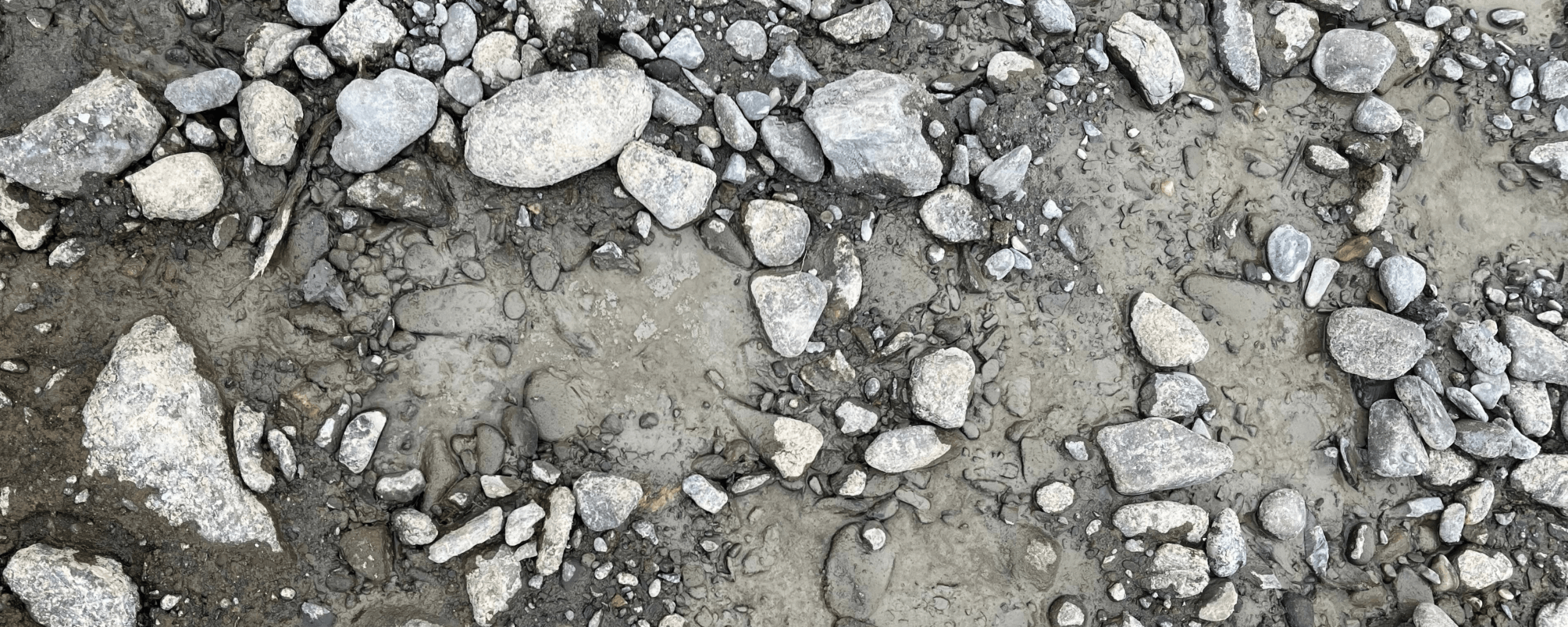
Some art ideas begin with a sketch. Others begin with a material. This one began with mud, more specifically, clay I collected from the bed of the Aroostook River here in Caribou, Maine.
I’ve used river clay before, but never quite like this. A few years ago, I harvested and processed some of the natural clay I found along the river and used it to make small trinkets and beads. I shaped the pieces by hand and eventually fired them outside in a pit fire. It was one of those projects that started simply because I wanted to know: Can I actually make something with this?
As it turns out, I could, but it was more work than my body could really handle. Little did I know that years later I would find myself asking almost the same question about that same material, with one small change: Can I actually PAINT something with this?
A Different Way to Look at River Clay
Fast forward to 2026. One morning, while having coffee and watching YouTube, I came across Karelia Blum’s videos about making paints from materials gathered from the earth. The idea fascinated me. Until then, I had always thought of the clay as something to shape, dry and fire, but seeing earth used as pigment made me look at it in a completely different way.
That was all it took. I needed to try it.
From the Riverbed to Paint
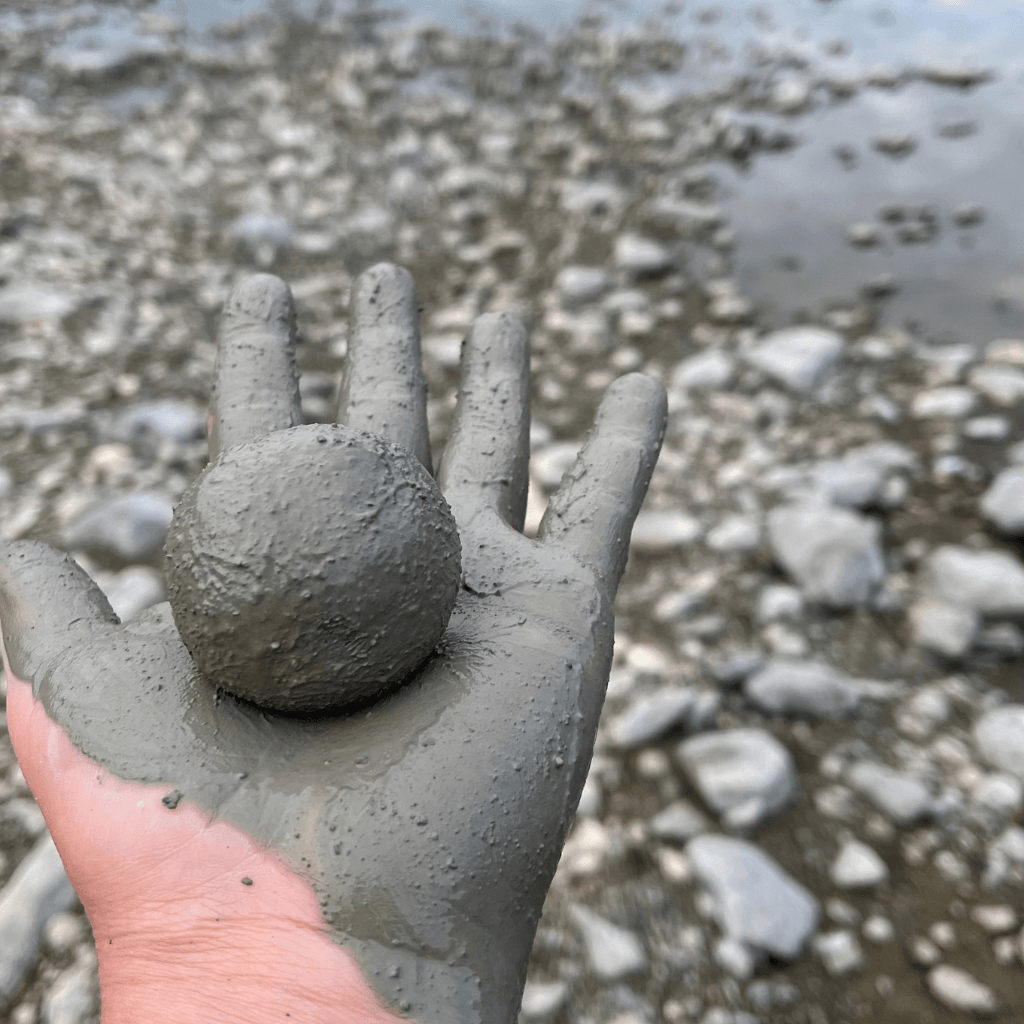
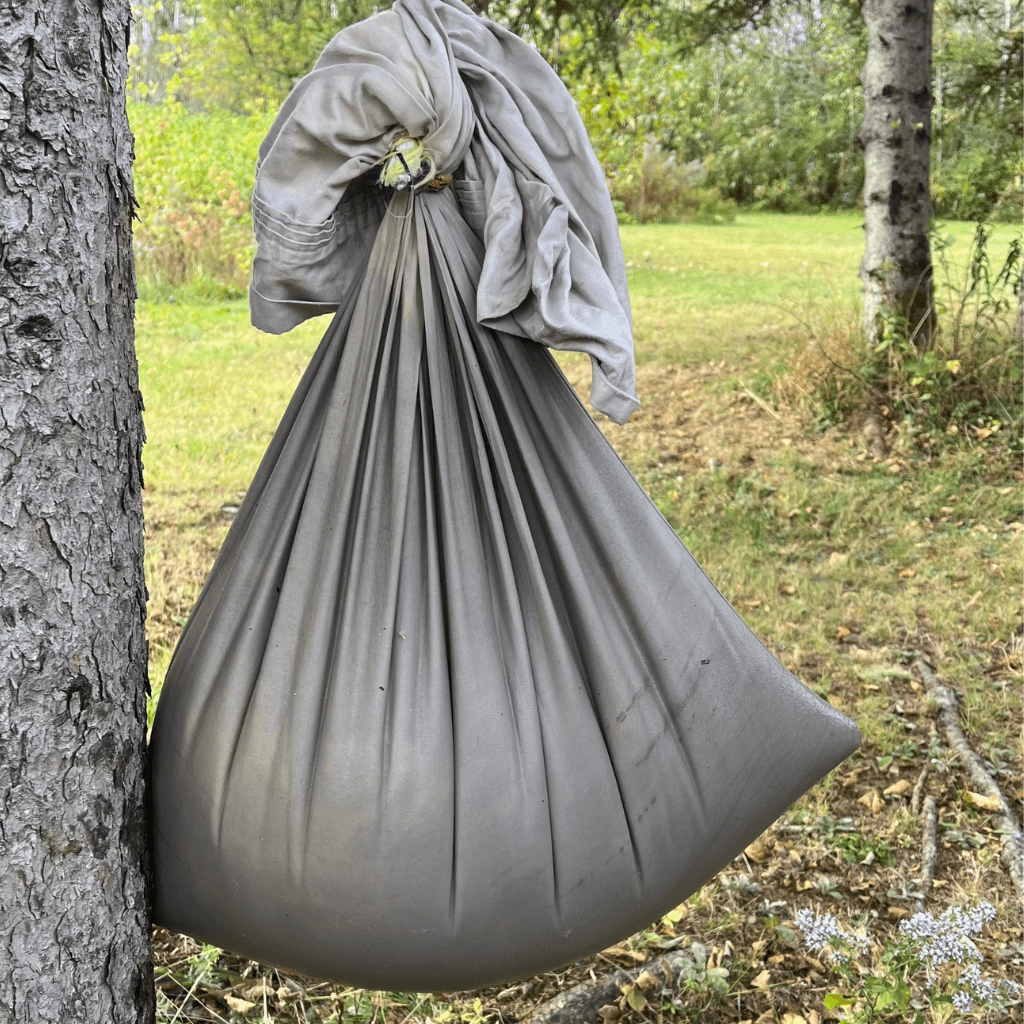
The clay I used for this painting was the same clay I had harvested and processed years earlier for my trinkets and beads. I have to say, preparing clay is truly a project in itself. The raw clay had to be cleaned, separated and slowly dried while hanging in a pillowcase.
The process is physically demanding and not something I can really do anymore, but I still had some processed clay tucked away. That is one of the things I love most about working with materials from the Aroostook River. Something I collected and prepared years ago for one purpose can end up taking me in a completely different direction.
Instead of adding something from the river to the artwork, I wanted the river itself to become part of the paint
Testing the Clay as Paint
Before creating the finished piece, I did a few tests to see how the processed clay behaved with water, how it moved across paper, how much color it left behind and whether I could build it up enough to use it more like paint.
Natural clay doesn’t behave exactly like something squeezed from a tube. The texture, color and consistency come from the material itself, and those variations are part of what makes working with it so interesting.
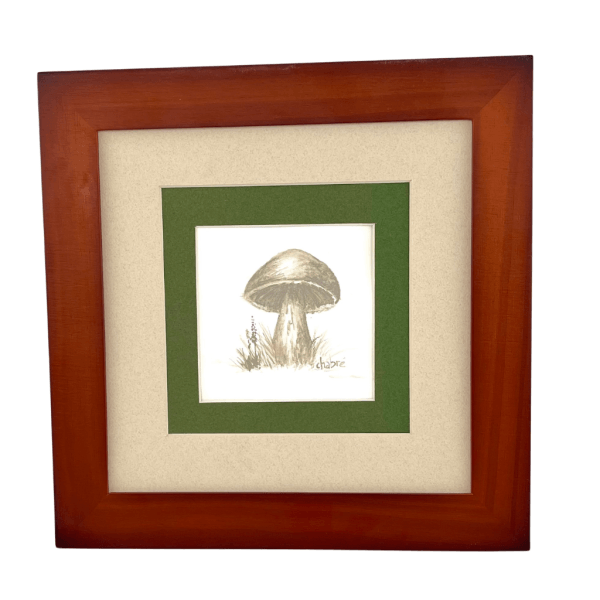
Once I had a better understanding of how it behaved, I moved on to Arches paper and painted a mushroom.
A Mushroom Made From the Aroostook River
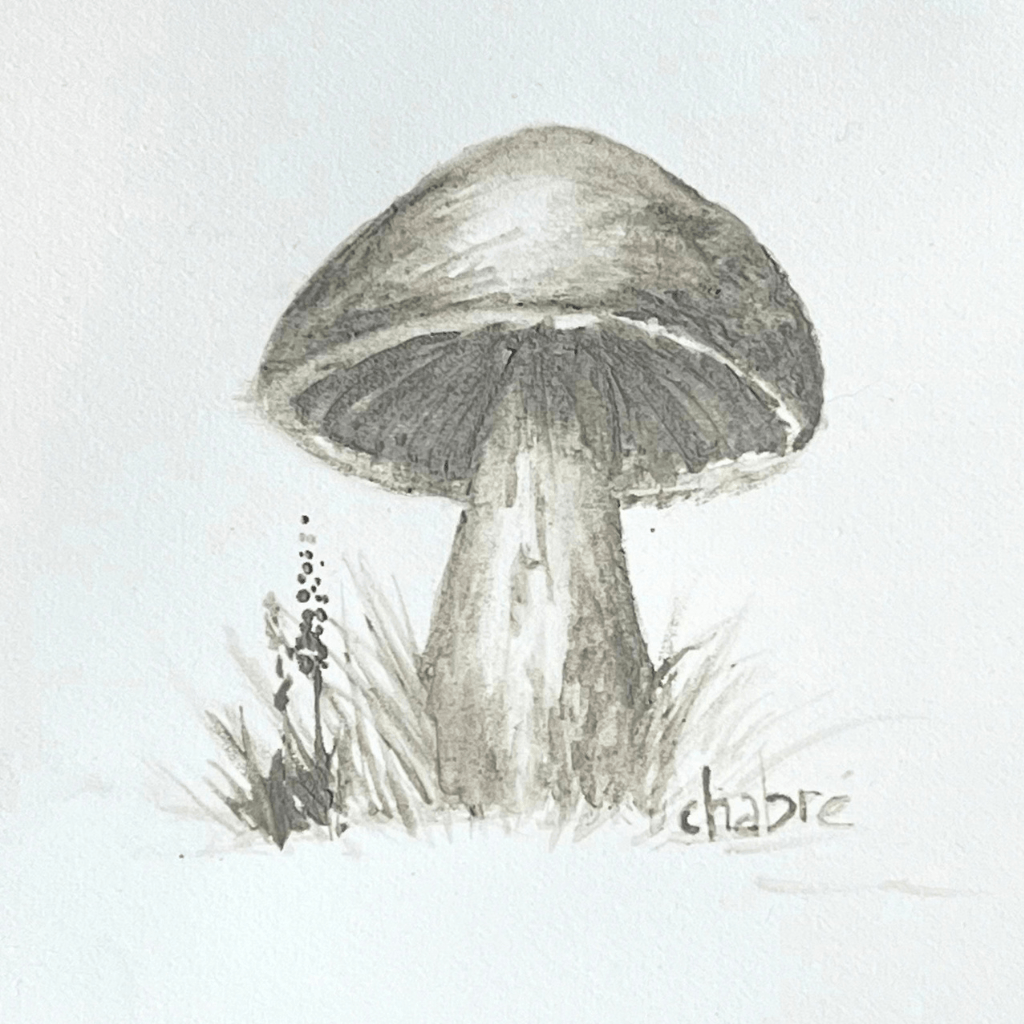
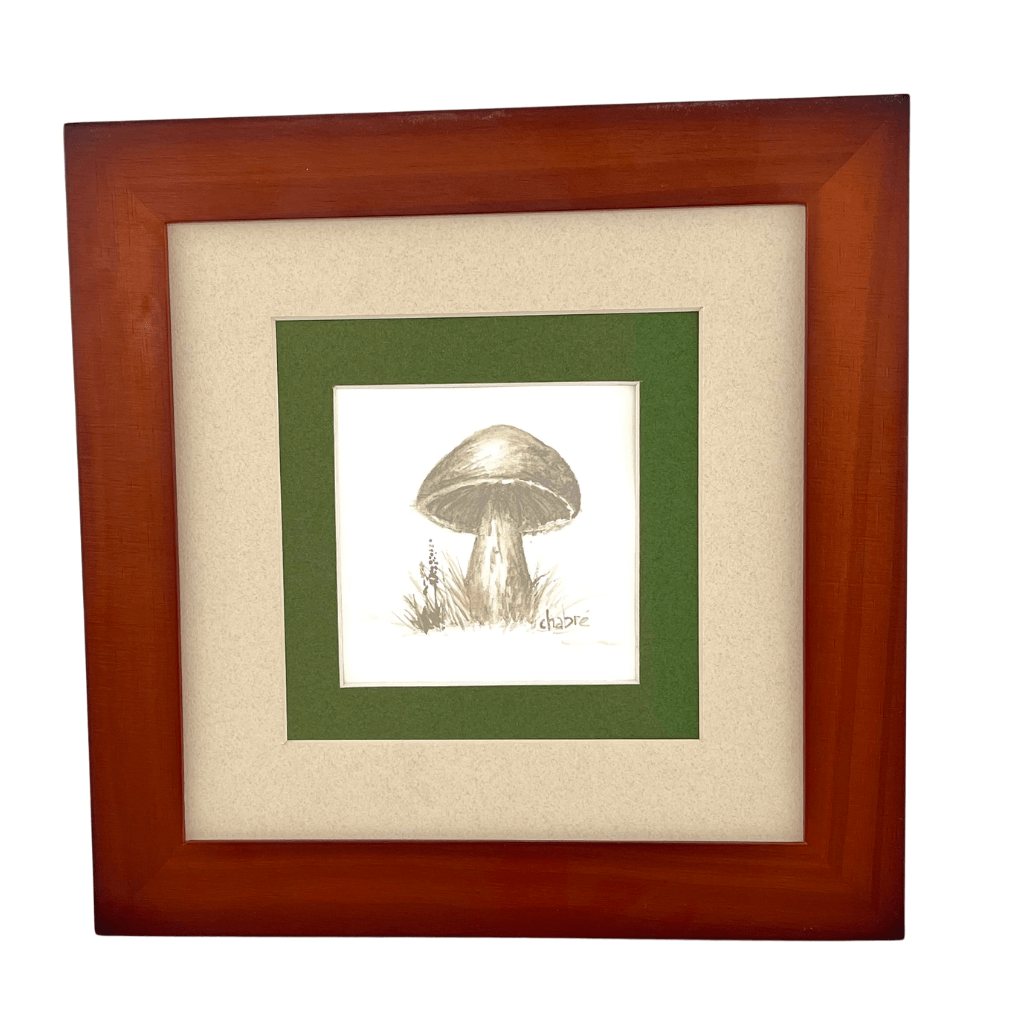
The finished mushroom painting was created on Arches paper using Aroostook River clay as the pigment.
The clay gives the painting a soft, sepia tone with subtle natural variation throughout. I love that the color comes directly from the river itself rather than from a tube of paint.
For me, that connection to the Aroostook River is what gives the piece its character.
The River Keeps Adding to the Palette
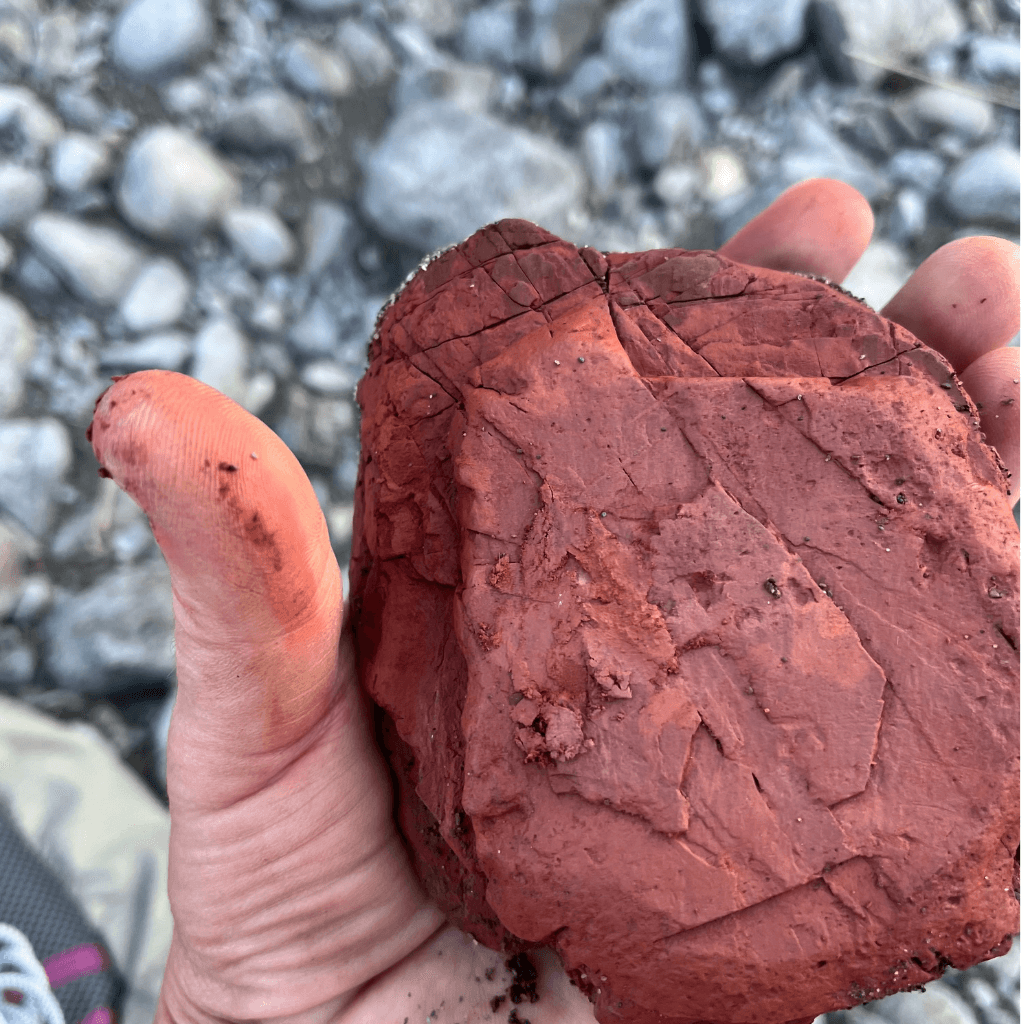
Since making the mushroom painting, I’ve started looking at the riverbed a little differently. I’ve now found several natural pigments along the Aroostook River, including black pigment, red ochre and yellow ochre.
Finding them has opened up an entirely new direction for me. I bought a mortar and pestle so I can grind the materials and begin experimenting with turning them into paints of their own this winter.
Now I find myself looking at rocks, soil and clay and wondering what color might be hiding inside. The mushroom painting may have been my first real experiment with painting from the river, but it won’t be the last.
Latest from Riverbed Art
Explore some of the newest original artwork and prints currently available.
-
 The Invisible Artist with an Invisible Illness – 8×10 Mounted Fine Art Print$60.00
 -
 The Invisible Artist with an Invisible Illness | Fine Art Velvet Ghost PrintPrice range: $20.00 through $30.00
 -
 Aroostook River Clay Mushroom – Original Painting$125.00